Policy Commentary
Geopolitics
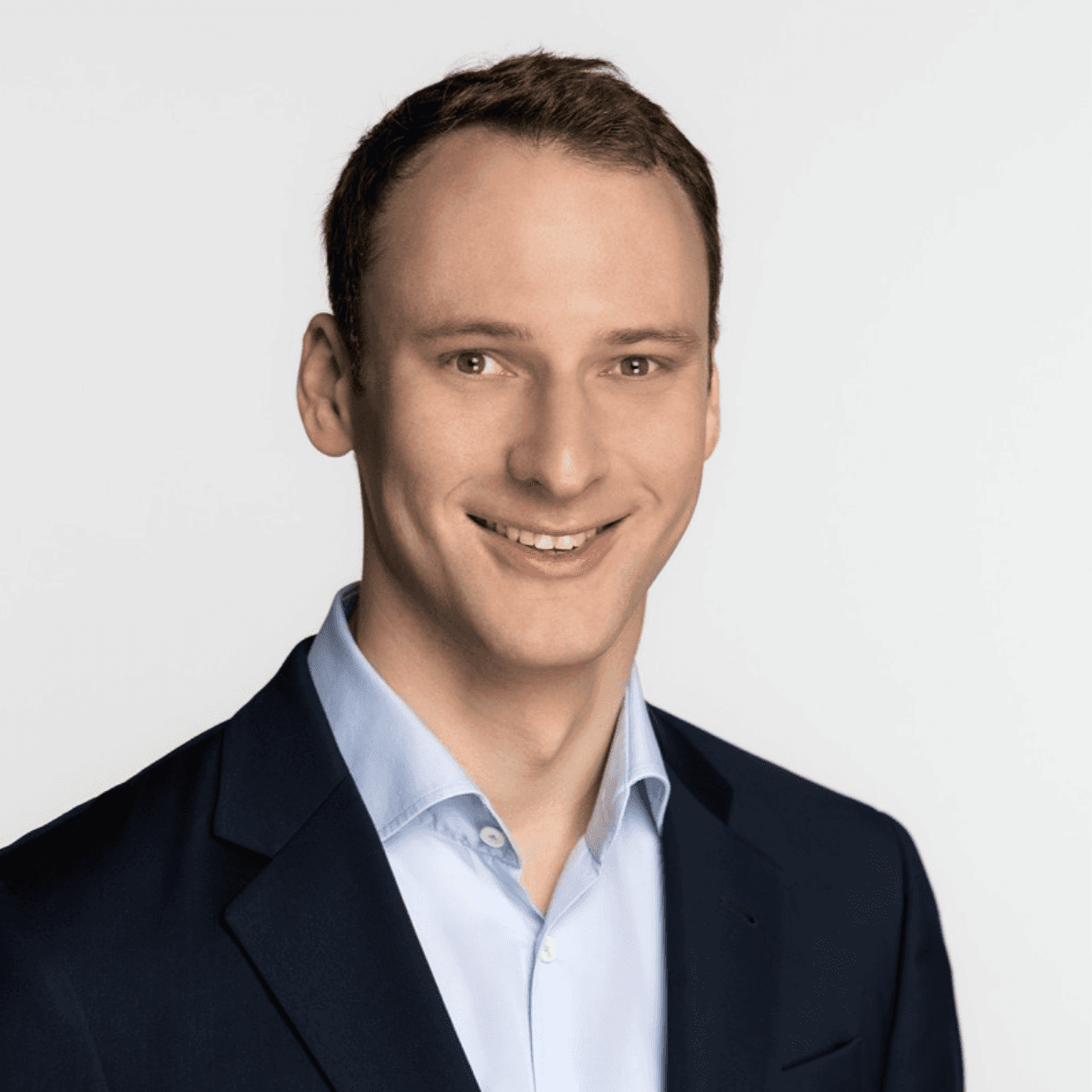

“We cannot imagine living without the ocean. Everything is ocean-related in our lives,” says Moetai Brotherson, President of French Polynesia, a big ocean state.
A big ocean state is a state or territory whose exclusive economic zone in the ocean is significantly bigger than its inhabitable land mass and whose culture is therefore ocean-centric. As previously outlined with MESA, this definition by Columbia University Professor Jenik Radon and me is the result of our cooperation and research with governments of big ocean states from across the world, from Greenland in the Arctic to French Polynesia in the Pacific and Saint Kitts and Nevis in the Caribbean.
This article offers a deep dive highlighting the cross-cutting nature of the second big ocean state dimension within our definition, the ocean-centric culture, the ocean as cultural heritage. To make this not immediately apparent dimension tangible, I will introduce our research experiences in French Polynesia as an illustrative case study. While the expression of ocean-centric culture varies across big ocean states, the underlying sentiments connect big ocean states.
Five million square kilometers of exclusive economic zone belongs to French Polynesia. In Tahitian, this area is called Te Tai Nui Atea, the “ocean of peace”. Therefore, Moana, the Tahitian word for ocean, is at the center of all parts of French Polynesian life, economically, socially, politically, environmentally and culturally. All these elements are connected through Mana, the sacred force felt throughout French Polynesia.
Sitting under the cover of dense palm trees around a wooden table in a communal garden in Moorea, Tahiti’s neighboring island, we clearly understood that more than just the land-to-ocean ratio needs to be recognized when defining big ocean states. In this setting, we spoke with French Polynesian environmental activist Hinano Murphy for our Columbia University documentary on the issue of deep-sea mining. “Like my mom will say, I am the ocean. I am born ocean. I eat ocean. I think ocean. I dream ocean,” Hinano Murphy highlighted. “It is something permanent, it is there, and you cannot miss it. All the rituals, everything you have, our food, our daily life is all because of the ocean. It’s there and you can’t miss it,” she elaborated on the comprehensive ocean-centric culture of big ocean states.
In the cultural world, this ocean-centric culture has its clear expression in Tahitian dance. Taina Tinirauarii, a Tahitian dance champion, explained this connection as follows: “We have a very deep connection to the ocean. The central themes of our songs, dance and costumes tell the story of the sea. Our people will often go to the sea together to find cohesion and inner strength, as well as connection to each other.”
She continues by saying that “When we don't know what to do anymore (…) we're going to take a break and go to the ocean. We're going to go into the sea and completely immerse ourselves. And what we're going to do is, when we suddenly come out of the sea, we're going to go in the sun, we're going to dry off. And we're completely cleansed, entirely on the inside.”
The ocean-centric culture also clearly guides decision makers across French Polynesia, as President Brotherson highlights: “It’s very obvious that we are ocean people. There’s no separation of land and ocean in the traditional Polynesian culture – it’s just a continuum.”
This continuum has been passed on from generation to generation, as President Brotherson describes: “We have so many things that come from our ancestors that can be shared talking about protecting the environment. Our ancestors had something called Rahui, a way of preserving resources around an island or on an island. And it was our way of living for centuries.” French Polynesia’s ancestral knowledge still guides its global role today: “Now Rahui is being integrated into these big COP meetings and being integrated into the modern world. And that's something that makes me happy because it is the recognition of the value of this ancestral knowledge,” President Brotherson says.
One of the representatives advocating for the inclusion of ocean-centric ancestral knowledge and culture is Hinano Murphy. She introduced the indigenous and ancestral perspective on the cultural importance of the ocean, Moana, at the International Seabed Authority meetings. Back on Moorea, Hinano Murphy closed our conversation by saying “The ocean is the most sacred place of our home. The ocean is where you look to find peace. But also to find life.”
FIND MORE