Policy Paper
Technological Frontiers

Background:
According to the Inter-American Development Bank, in 2021 the pandemic worsened the learning crisis in Latin America: 86 million young people were affected by school closures. This had a direct impact on human capital, particularly in relation to school dropout rates and job losses. In this context, the implementation of educational technology (EdTech) in the region is considered a sound strategy, as stakeholders and local leaders view it as an opportunity to expand access to education.
In recent years, demand within the EdTech ecosystem has increased significantly. However, one of the main challenges for EdTech implementation is the limited technological infrastructure in Latin America (Lustosa Rosario et al., 2021). In addition, the challenge of ensuring educational quality remains crucial for strengthening productivity and achieving sustainable economic growth (Inter-American Dialogue, n.d.).
This is compounded by a fragile economic context: economic growth stability in Latin America and the Caribbean is expected to remain weak in 2026. The region is projected to grow by only 2.3 percent, compared to 3.1 percent projected for the global economy, amid an international environment marked by high uncertainty, geopolitical tensions, and adverse climate risks (ILO, 2025).
In response to these challenges, a World Bank study surveyed several professors, many of whom stated that the incorporation of artificial intelligence (AI) in higher education is key to preparing students for the labor market (Molina & Medina, 2025). Likewise, McKinsey & Company asserts that AI represents a major opportunity for the region; it is estimated that these advancements could generate up to $100 billion in new technology services, with significant impacts on productivity and income if countries invest in education and digital training. Thus, the integration of technology in the classroom becomes an essential element for seizing the opportunities of the new global economic model (Child et al., 2025).
In summary, the implementation of educational technology in Latin America represents an opportunity to transform educational systems and strengthen regional competitiveness. Based on the reviewed background, it is evident that the pandemic revealed the urgent need to incorporate digital solutions that expand access, improve educational quality, and prepare students for a constantly evolving labor market. The objective of this research is to analyze the effects that the adoption of EdTech has had on Latin American competitiveness, considering its impact on the strengthening of human capital, economic innovation, and employability.
Literature Review:
A literature review will be conducted along three axes, based on the effects of the implementation of educational technology on competitiveness: strengthening of human capital, innovation and economic dynamism, and improvement of employability.
Strengthening of human capital
Human capital is a key axis for the inclusion of technology in education. Mena Guacas et al. (2025) state that educational quality, the way students learn, their critical thinking, and the skills they acquire, have a greater impact on a country's competitiveness and economy than individuals’ years of formal education. Therefore, what drives development is quality learning. Moreover, using technology to improve education strengthens human capital, which serves as the foundation for national competitiveness. This translates into the use of digital platforms, interactive resources, artificial intelligence, and more. Akavova et al. (2023) expand on this idea, affirming that educational technology indeed has the potential to enhance the formation of human capital by allowing education to adapt to students’ individual needs. Additionally, technology enables broader access to education, including for students facing economic, geographic, or physical challenges, thus facilitating access to learning and its application to real-life contexts.
On the other hand, Silva Lira (2005) points out that a country’s competitiveness largely depends on the meso-environment, that is, the intermediate level between companies and national policies. For example, technological and research institutes, universities, physical and digital infrastructure, and collaboration networks are key actors that facilitate productive development and create a reliable ecosystem for companies to innovate and compete more effectively. In addition, a strong learning capacity within the territory, meaning the ability to incorporate new technologies, improve processes, and leverage local knowledge is essential. This implies that a territory with solid capabilities is one where the public and private sectors can cooperate to enhance competitiveness.
In the case of Latin America, Kenski and Lacerda Santos (2019) observe that the incorporation of information, communication, and expression technologies has sought to address structural challenges such as low educational quality, digital illiteracy, and inequality in access to resources. This is ideal, as educational technology thus serves as a means to democratize education and strengthen human capital, rather than functioning merely as a technical tool. They argue that it must be integrated into educational processes that genuinely promote understanding, critical thinking, and problem-solving. However, using technology does not automatically ensure better learning outcomes; it depends on how it is applied in the educational context. Specifically, it should be part of a well-designed pedagogical strategy, tailored to the Latin American social reality, and aimed at enhancing competitiveness through capacity development. The ultimate goal is for students to understand, question, and apply what they learn.
Innovation and economic dynamism
Educational technology has become a key factor in driving innovation and energizing Latin American economies. The COVID-19 pandemic marked a turning point in the use of educational technology. Before the pandemic, investment in this area was scarce, and its use for learning was limited. However, once COVID-19 emerged as a global health crisis, schools were forced to seek technological solutions to deliver online classes and assign digital materials, pushing innovation in a field that had been relatively underdeveloped at the time. As a result, digital literacy and teaching and learning skills began to develop for both teachers and students. This shift gave new momentum to education and is seen as a major step forward for regional competitiveness by fostering innovation within the education sector (Castillo-Canales et al., 2023).
Despite these advances, the region continues to face structural setbacks. Only a few economies in Latin America have achieved international competitiveness, mainly due to higher investment in areas such as technology, education, and innovation. The majority, however, still exhibit low productivity, weak educational systems, and limited economic diversification. Consequently, most of Latin America remains unable to fully integrate into global value chains, as its technological and innovation base is still very limited. For example, many productive sectors rely heavily on raw materials or low–value-added manufacturing rather than producing knowledge- and technology-based goods and services. This limits the region’s ability to compete with economies from other parts of the world (Mortimores & Peres, 2001).
In this context, educational technology in Latin America is used more as a complement rather than as a transformative tool or a means to address deficiencies in educational systems. Its contribution to regional competitiveness remains limited, as it continues to face institutional constraints, unequal access, and scalability challenges (Jassir, 2018).
Improvement of employability
In its most literal sense, the term “employability” refers to the set of characteristics that make an individual suitable for integration into the labor market. However, given the complexity of the latter, it is necessary to assess this concept and how it has evolved in recent decades.
In line with the above, Barrios and Trujillo (2020) define employability as a personal competence relevant to the labor market. They argue that the concept encompasses more than simply having a job; it also includes the skills needed to enter and remain in the labor market. Accordingly, Campos (n.d.) portrays employability as an extension of the concept of human capital. This is partly because educational policymakers base their proposals on human capital theory, with the ultimate goal of strengthening it.
For their part, Juárez and Marqués (2019) analyze employability in light of new technologies. They suggest that the concept has been redefined by constant technological change and identify self-sufficiency as its central component. They note that the information society demands skills such as the use of software and hardware; the ability to search for and analyze information; communicate through technological tools; and develop certain values regarding the use of technology. These competencies can be decisive for obtaining employment.
Formichella (2012) adds that employability encompasses a complex set of aptitudes and conditions that enable individuals to integrate into the labor market. She distinguishes between aptitudes and attitudes as components of employability, the former referring to one’s skills, and the latter to one’s willingness to act, and argues that both are developed through early education at home and reinforced in school. In this sense, the author indicates that individuals with fewer resources have fewer opportunities to develop strong aptitudes and attitudes for the labor market, thereby perpetuating inequality.
Figure 1. Summary of the thematic axes
Axis | Description | Authors |
Strengthening of human capital | The use of educational technology drives the development of human capital. | Akavova et al (2023); Guacas et al (2025); Kenski & Lacerda Santos (2019); Silva Lira (2005) |
Innovation and economic dynamism | The use of educational technology promotes innovation and economic competitiveness. | Castillo Canales et al (2023); Jassir (2018); Mortimores & Perez (2001) |
Improvement of employability | The use of educational technology strengthens students’ skills, facilitating their insertion into the labor market. | Barrios & Trujillo (2020); Campos (n.d.); Formichella (2012); Juárez & Marqués (2019) |
Note. Own elaboration.
Theoretical Framework
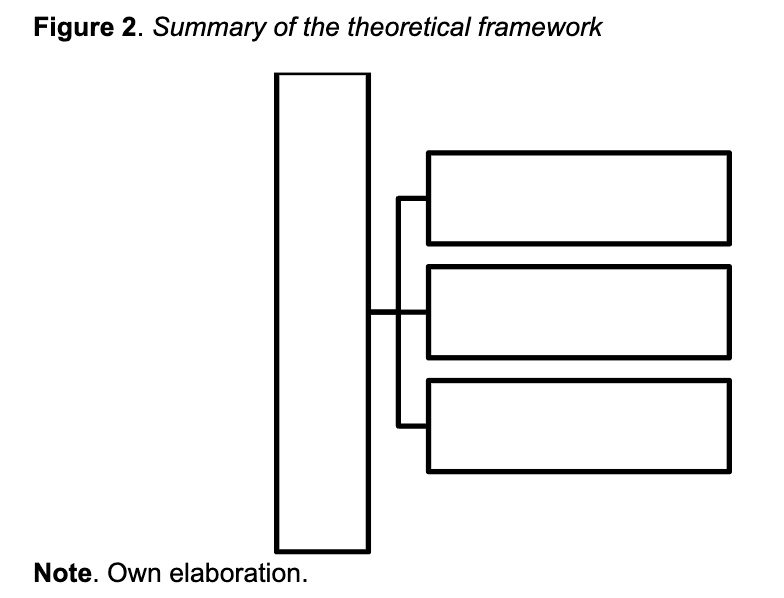
The research will be approached from the perspective of strengthening the region’s human capital, as this is a direct effect stemming from the implementation of educational technology. Three variables are presented to explain this process: educational quality, educational accessibility, and skills development.
Educational accessibility reduces learning gaps and promotes the inclusion of groups that are typically marginalized. In turn, educational quality implies that learning becomes meaningful. Quality largely depends on how technology is integrated into teaching; when used pedagogically, it fosters learning, understanding, and critical thinking. Therefore, quality reaches its greatest potential through strategies that incorporate technology, as long as it is used as a means to improve learning rather than as an end in itself, since technology alone does not guarantee successful outcomes.
A key element within this pillar is teacher training. The incorporation of technology in classrooms also requires training for teachers so that they can adapt their pedagogical methods to digital environments and take advantage of opportunities offered by tools such as AI. The gap between technology and teaching may widen if educators are not supported in this process, which could negatively affect learning quality and, consequently, the strengthening of human capital.
Finally, accessibility and educational quality enable the development of competencies. This includes technical skills (such as the use of technological tools and digital literacy), cognitive skills (such as problem-solving, analytical, and critical thinking), and soft skills (such as communication, teamwork, and adaptability). These competencies aim to prepare students to meet the demands of an increasingly competitive and digitalized labor market. In the Latin American context, developing these skills poses a challenge, as it requires pedagogical approaches adapted to the region’s sociocultural realities.
Overall, these variables are interrelated in a sequential manner: educational accessibility provides equitable access to learning, quality transforms that access into effective learning experiences, and skills development is the result of this process, driving the strengthening of human capital in the Latin American region.
Policy Guidelines
Based on the findings obtained throughout this research, the following policy guidelines are proposed to enhance the impact of educational technology on Latin American competitiveness:
Promote the integration of educational technologies in public and private schools, according to students’ level of development and maturity, so that they become familiar with them as facilitators of everyday activities.
Strengthen investment in training programs and, more broadly, in education for sectors where access has historically been limited.
Implement training sessions on the use of technology for the active workforce.
Develop programs to provide technological resources to individuals who face barriers to accessing formal education and train them in their proper use.
Invest in continuous professional development programs for teachers, strengthening their digital and pedagogical competencies to effectively integrate technology into teaching and learning processes.
These policy guidelines aim to reduce gaps in access and quality, while strengthening human capital, employability, and innovation throughout the region.
Conclusion
The implementation of educational technology in Latin America drives the region’s competitiveness through the strengthening of human capital. It can expand educational accessibility, reduce learning gaps, and promote the inclusion of marginalized groups. However, the impact of technology on educational quality depends on how it is integrated into teaching. In other words, significant improvements in learning only emerge when technology is used with a formative purpose that emphasizes critical thinking and understanding.
Educational accessibility and quality derived from the proper use of EdTech foster the development of competencies, preparing students for an increasingly demanding and technology-driven labor market. Nevertheless, the Latin American region faces structural challenges such as limited technological infrastructure, socioeconomic inequalities, and a lack of innovation-oriented policies. Overcoming these barriers requires greater cooperation among government, the private sector, and educational institutions to create and strengthen an ecosystem that enables inclusive digitalization.
References
Akavova, A., Mukhudadayeva, R., & Turluyev, R. (2023). Strategies for improving efficiency and developing human capital in the context of digitalization. E3S Web of Conferences, 451, 05018. https://doi.org/10.1051/e3sconf/202345105018
Barrios Zarta, J., & Sáenz Trujillo, J. (2020). Análisis de los factores para la empleabilidad en los profesionales del Espinal-Tolima. Revista Innova ITFIP, 6(1), 9-28. Recuperado a partir de http://revistainnovaitfip.com/index.php/innovajournal/article/view/76
Castillo-Canales, D., Mejías, L., Roque-Gutierrez, E., Valentini, A., & Rüebcke, J. (2023). Ed-Tech landscape and challenges in Latin America and the Caribbean (Occasional Paper No. 90). Southern Voice. https://southernvoice.org/wp-content/uploads/2023/11/Ed-tech-LAC-Castillo-et-al-2023.pdf
Child, F., Valenzuela, J., Ferreira, N., & Francis, T. (2025). Seizing the moment: Latin America’s productivity opportunity. McKinsey & Company. https://www.mckinsey.com/featured-insights/americas/seizing-the-moment-latin-americas-productivity-opportunity
Formichella, M. M., & London, S. (2013). Empleabilidad, educación y equidad social. Revista de estudios sociales, (47), 79-91. http://dx.doi.org/10.7440/res47.2013.06
Inter-American Dialogue. (n. d.). How can Latin America become more productive? The Dialogue. https://thedialogue.org/analysis/how-can-latin-america-become-more-productive/
International Labour Organization (2025). Panorama Laboral 2025. América Latina y el Caribe. Ginebra: Oficina Internacional del Trabajo, 2025. https://www.ilo.org/sites/default/files/2025-12/OIT-Informe-PANORAMA-LABORAL-2025.pdf
Jassir, M. (2018). The Rise of Educational Technologies in Latin America: An Analysis of Brazilian and Mexican Ecosystems. https://repository.upenn.edu/server/api/core/bitstreams/21a8e9ca-697e-4ce7-9a97-a7164e33934c/content#page=28.00
Juárez Arall, J., & Marqués Molías, L. (2019). Aspectos de la competencia digital para la empleabilidad. REOP - Revista Española de Orientación y Psicopedagogía, 30(2), 67–84. https://doi.org/10.5944/reop.vol.30.num.2.2019.25339
Kenski, V., & Lacerda Santos, G. (2019, September 30). Qualitative Research on Educational Technology in Latin America. Oxford Research Encyclopedia of Education. Retrieved 28 Jan. 2026, from https://oxfordre.com/education/view/10.1093/acrefore/9780190264093.001.0001/acrefore-9780190264093-e-1279.
Lira, I. S. (2005). Local economic development and territorial competitiveness in Latin America. Cepal Review, 2005(85), 79-98. https://repositorio.cepal.org/server/api/core/bitstreams/fcb120cf-52d4-4c65-9a25-6182e70fcc0c/content#page=79
Lustosa Rosario, A. C., Yaacov, B. B., Franco Segura, C., Arias Ortiz, E., Heredero, E., Botero, J., Brothers, P., Payva, T., & Spies, M. (2021). Tecnología educativa en América Latina y el Caribe. Inter-American Development Bank. https://doi.org/10.18235/0003828
Mena-Guacas, A. F., López-Catalán, L., Bernal-Bravo, C., & Ballesteros-Regaña, C. (2025). Educational Transformation Through Emerging Technologies: Critical Review of Scientific Impact on Learning. Education Sciences, 15(3), 368. https://doi.org/10.3390/educsci15030368
Molina, E., & Medina, E. (2025). La revolución de la IA en la Educación Superior. Lo que hay que saber. En Innovaciones Digitales en Educación. Banco Mundial. https://documents1.worldbank.org/curated/en/099809404152514027/pdf/IDU-91d6e888-fcbd-4694-ac88-18bcae998934.pdf
Mortimore, M., & Peres, W. (2001). Corporate competitiveness in Latin America and the Caribbean. CEPAL Review, 2001(74), 35-57. https://repositorio.cepal.org/server/api/core/bitstreams/dff73004-46e5-475a-ae6f-f01ea67f9d9d/content
Nair, A. (2021). Role of EdTech Startups in Reshaping Higher Education Post-Pandemic. International Journal of Academic Research, 14(01). https://doi.org/10.2021/ijarcm.14.01.002
Ríos, G. C. (2003). Implicancias del concepto de empleabilidad en la reforma educativa. Revista Iberoamericana de educación, 33(2), 1-9. https://rieoei.org/RIE/article/download/3003/3905/1082
FIND MORE