Planetary Resilience
Policy Paper
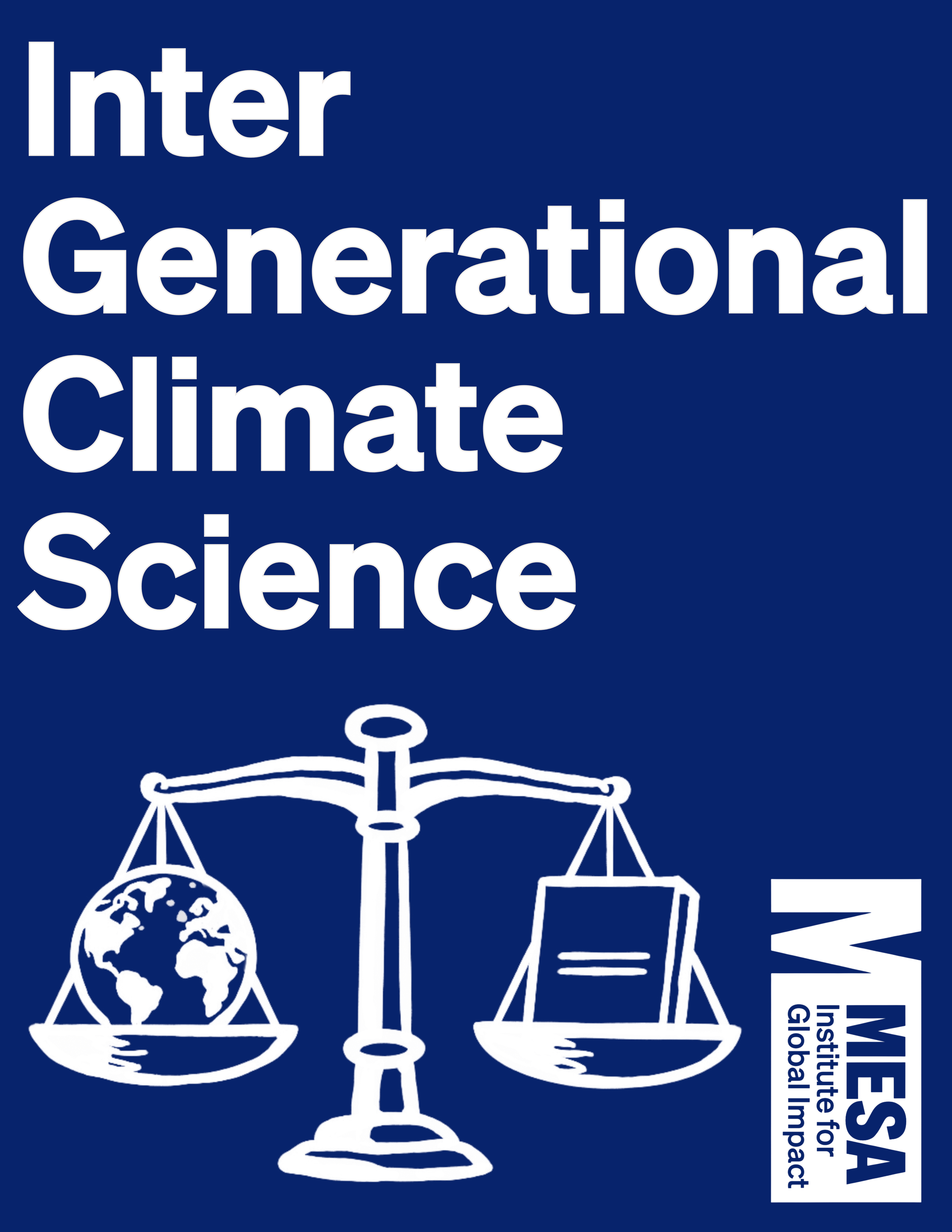
In July 2025, the International Court of Justice delivered its most consequential opinion¹ on international climate policy: States have a legal obligation to take action on climate change to safeguard intergenerational equity. The opinion follows a years-long, global campaign² championed by Pacific law students who sought legal clarity on the duties of States in taking action against climate change, and the consequences of their inaction. World's Youth for Climate Justice,³ the youth-led organization that coalesced around the Pacific advocates, resulted in concrete mechanisms to hold States responsible before courts. Yet, while this landmark achievement crowns young people’s leadership in climate justice, they remain critically underrepresented in the leading international body on climate science.
The numbers speak for themselves. A 2018 survey of 100 female authors of the Intergovernmental Panel on Climate Change (IPCC) found that only 4% were aged 40 or under.⁴ While the IPCC made strides in gender diversity, achieving a majority-women authorship in its February 2025 report,⁵ no similar breakthrough exists for youth inclusion.⁶ So-called “national focal points” – usually, ministries of environment or similar government agencies⁷ – nominate authors, and youth underrepresentation in political hierarchies can lead to systemic barriers for junior scientists to access author roles.⁸
Young people’s inclusion is key to protecting future generations. The Panel’s latest Assessment Report recognizes how the climate crisis disproportionately impacts youth and children, who are also systematically marginalized from climate decision-making.⁹ In 2023, international legal experts further recognized young people’s special role in protecting the human rights of future generations from climate change.¹⁰ If the ICJ recognizes the Panel’s work as the “best available science” on climate change,¹¹ how can the premier climate scientific body effectively inform courts and legislators on the protection of future generations without including youth?
In an exclusive interview from December 2024, IPCC Vice Chair Diána Ürge-Vorsatz acknowledged this stark contradiction: “I’d love to see youth integrated into the IPCC and climate negotiations structurally, not just as a symbolic presence [...] but it’s not easy given how those structures are set up.” These comments come as the IPCC committed to enhanced engagement of early-career researchers in its sixth assessment cycle (AR7).¹² Over the years, the Panel has increasingly involved young researchers to alleviate the workload of senior researchers and created opportunities for targeted engagement, such as the IPCC Scholarship Programme.¹³ However, a dearth of mechanisms to engage young researchers as authors in the IPCC processes remains.
According to IPCC’s own rules, author groups need to include experts without prior experience in the Panel, as well as reflect the necessary range of expertise to produce the mandated reports.¹⁴ Between 2018 and 2021, more than 600 early-career researchers voluntarily contributed to the IPCC report reviews,¹⁵ demonstrating young scientists’ capacity and motivation to engage with IPCC processes. These figures, the youth’s role in protecting future generations, and IPCC’s own reports all point towards a clear conclusion: young researchers have the academic credentials, moral legitimacy, and scientific justification to sit at the table.
The solutions are straightforward. Scientific associations can advocate for their national focal points to establish target quotas of early-career scientists who receive nominations at each reporting cycle. At the same time, the IPCC has previously established working groups¹⁶ and ad-hoc inclusion policies¹⁷ to engage marginalized voices in its processes. Governments and civil society constituencies, such as YOUNGO, can petition the IPCC Bureau to establish a youth inclusion working group during AR7, which would be both in line with IPCC’s rules and serve the long-term interests of climate science.
As Dr. Ürge-Vorsatz concluded: "We just need to be much more structurally integrating them rather than just talking mystically." The ICJ has provided a legal imperative. The IPCC’s own reports provide the scientific rationale. With the Panel’s commitment to prioritizing young researchers’ engagement over the next reporting cycle, the institutional conditions are more than encouraging for transforming the IPCC into a truly intergenerational enterprise, one fit to advise on how to safeguard future generations.
Note: The quotes contained in the guest essay are sourced from an unpublished interview of the author with IPCC Vice Chair Diana Ürge-Vorsatz held on 4 December 2024 in Rome, Italy, on the occasion of her guest lecture at John Cabot University.¹⁸
Endnotes
1. International Court of Justice (ICJ) (2025) Advisory Opinion on the Obligations of States in Respect of Climate Change. The Hague: ICJ. Available at: https://www.icj-cij.org/sites/default/files/case-related/187/187-20250723-adv-01-00-en.pdf (Accessed: 18 January 2026).
2. The Guardian (2025) ‘Pacific students who won climate case at the International Court of Justice’, The Guardian, 25 July. Available at: https://www.theguardian.com/world/2025/jul/25/pacific-students-who-won-climate-case-icj-international-court-of-justice-hague (Accessed: 18 January 2026).
3. World’s Youth for Climate Justice (WY4CJ) (n.d.) Official website. Available at: https://www.wy4cj.org/ (Accessed: 18 January 2026).
4. Hanlon, P. et al. (2018) ‘Democracy, social capital and public health’, International Journal of Environmental Research and Public Health, 15(3), Article 5834669. Available at: https://pmc.ncbi.nlm.nih.gov/articles/PMC5834669/ (Accessed: 18 January 2026).
5. Tandon, A. (2022) ‘IPCC’s special report on cities is its first with majority women authorship team’. Carbon Brief, 21 February. Available at: https://www.carbonbrief.org/ipccs-special-report-on-cities-is-its-first-with-majority-women-authorship-team/ (Accessed: 18 January 2026).
6. ⁶ Tandon, A. (2023) ‘Analysis: How the diversity of IPCC authors has changed over three decades’. Carbon Brief, 15 March. Available at: https://www.carbonbrief.org/analysis-how-the-diversity-of-ipcc-authors-has-changed-over-three-decades/ (Accessed: 18 January 2026).
7. Intergovernmental Panel on Climate Change (IPCC) (n.d.) IPCC National Focal Points. Available at: https://www.ipcc.ch/apps/contact/interface/focalpoints.php (Accessed: 18 January 2026).
8. Sundström, A. (2023) ‘Youth without representation’. Ash Center for Democratic Governance and Innovation, Harvard Kennedy School, 17 January. Available at: https://ash.harvard.edu/articles/youth-without-representation/ (Accessed: 18 January 2026).
9. Intergovernmental Panel on Climate Change (IPCC) (2021) AR6 Working Group I: Summary for Policymakers. Geneva: IPCC. Available at: https://www.ipcc.ch/report/ar6/wg1/downloads/report/IPCC_AR6_WGI_SPM.pdf (Accessed: 18 January 2026)
10. OHCHR (2023) Maastricht Principles on the Human Rights of Future Generations. New York: Office of the United Nations High Commissioner for Human Rights. Available at: https://www.ohchr.org/sites/default/files/documents/new-york/events/hr75-future-generations/Maastricht-Principles-on-The-Human-Rights-of-Future-Generations.pdf (Accessed: 18 January 2026).
11. Dunne, D. et al. (2025) ‘ICJ: What the world court’s landmark opinion means for climate change’. Carbon Brief, 25 July. Available at: https://www.carbonbrief.org/icj-what-the-world-courts-landmark-opinion-means-for-climate-change/ (Accessed: 18 January 2026).
12. ¹² Intergovernmental Panel on Climate Change (IPCC) (2024) Improving inclusivity in the Seventh Assessment Report (AR7), INF.15. Available at: https://apps.ipcc.ch/eventmanager/documents/87/180720240325-INF.%2015%20-%20Improving%20inclusivity%20in%20AR7.pdf (Accessed: 18 January 2026).
13. Savaresi, A. et al. (2024) ‘Youth participation and climate governance’, Frontiers in Climate, 6, Article 1395040. Available at: https://www.frontiersin.org/journals/climate/articles/10.3389/fclim.2024.1395040/full (Accessed: 18 January 2026).
14. Intergovernmental Panel on Climate Change (IPCC) (2018) Principles Governing IPCC Work: Appendix A. Geneva: IPCC. Available at: https://www.ipcc.ch/site/assets/uploads/2018/09/ipcc-principles-appendix-a-final.pdf (Accessed: 18 January 2026).
15. Moreno-Ibáñez, M., Casado, M., Gremion, G., Rabanal, V., Adojoh, O., Anoruo, C., Arshad, A., Bahar, F.A., Bello, C., Bergstedt, H., et al. (2024) ‘Engagement of early career researchers in collaborative assessments of IPCC reports: achievements and insights’, Frontiers in Climate, 6. Available at: https://www.frontiersin.org/journals/climate/articles/10.3389/fclim.2024.1395040/full (Accessed: 18 January 2026).
16. Intergovernmental Panel on Climate Change (IPCC) (n.d.) IPCC Gender Task Group [archived webpage]. Available at: https://archive.ipcc.ch/organization/gender.shtml (Accessed: 18 January 2026).
17. Intergovernmental Panel on Climate Change (IPCC) (n.d.) Gender. Available at: https://www.ipcc.ch/about/gender/ (Accessed: 18 January 2026).
18. John Cabot University (2024) JCU welcomes Professor Diana Ürge-Vorsatz for Kushlan Lecture [LinkedIn post], 4 December. Available at: https://www.linkedin.com/posts/john-cabot-university_jcu-welcomes-professor-diana-urge-vorsatz-activity-7275073610333978624-1cGE/ (Accessed: 18 January 2026).
FIND MORE